US removes Syria from list of state sponsors of terrorism
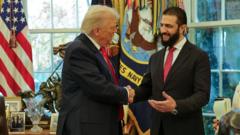
The Trump administration has embraced Syria's new president, former al-Qaeda linked militant Ahmed al-Sharaa.
The Trump administration has embraced Syria's new president, former al-Qaeda linked militant Ahmed al-Sharaa.
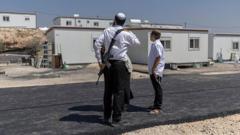
There has been a significant expansion of building and road construction on Palestinian land occupied by Israel in recent years.
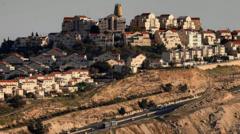
European countries and Canada pile on pressure over Israel's plans to expand settlements in a strategically vital part of the occupied West Bank.
Israeli plans to build on the area east of Jerusalem - which would divide the occupied West Bank in two - have long been internationally condemned.
The rare meeting comes a week after Israel rejected Donald Trump's peace plan for Gaza.
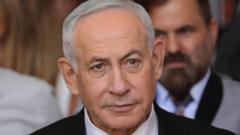
The Trump administration is said to be unbothered by the Israeli prime minister's rejection of the deal, viewing it as campaign rhetoric ahead of a general election.
A foreign ministry spokesman did not give details but said an agreement with the Gulf nation was "in the final stages".
There have been conflicting signals from the US and Iran, with Tehran denying President Trump's assertion that talks are under way.
Tehran has not responded to the suggestion that new talks are imminent. Trump has previously said a negotiated end to the war is close, only for strikes to resume.
US President Donald Trump said the Board of Peace has reached an agreement for the "complete disarmament" of Hamas in Gaza.
A senior Hamas official has told the BBC they have agreed to the Board of Peace's plan. Israel has not commented.
Republican Senator Lindsay Graham's funeral is bringing the two world leaders to town, where they'll separately visit the White House to discuss their region's wars.
Mamdani walked back his threat last week, acknowledging he lacked the legal power to arrest Netanyahu on a warrant issued by the International Criminal Court.
The US president says the landmark agreement to help Saudis develop nuclear energy is dependent on it joining the Abraham Accords.
Past US presidents insisted that Saudi Arabia normalise relations with Israel in exchange for nuclear technology.
The BBC's Sarah Smith explains the implications of the landmark cooperation agreement between both countries.
The agreement would fulfil a long-held Saudi ambition but could attract concern in Israel and from some US lawmakers.
Vice-President JD Vance is among US officials expected to take part in negotiations resuming on Saturday in Oman.
The BBC's chief international correspondent looks at how Iran's new leadership will respond to several issues affecting the country
Ali Khamenei will be buried at the Imam Reza shrine, Iran's holiest Shia Muslim site, ending six days of public mourning ceremonies.