Ben Jennings on Trump and Hegseth: mission accomplished? – cartoon
Continue reading...
Continue reading...
Why hasn’t the US learned the lessons of two Gulf wars? Plus Iran’s supreme statement of defiance Get the Guardian Weekly delivered to your home address When news breaks that dominates the agenda to the extent of the US-Israeli attack on Iran, one challenge for the Guardian Weekly team is how to keep the magazine’s covers feeling fresh, week after week, while remaining focused on the same story. For this week’s edition, in response to Patrick Wintour ’s must-read essay on how the US has ignored the lessons of two previous Gulf wars, we asked illustrator Doug Chayka to play with the idea of a Middle East that the US either cannot, or refuses to, see.
Alan West recalls a high-level meeting prior to the Iraq war. Plus letters from Spencer Hines and Margaret Squires At the final meeting prior to the invasion of Iraq between UK chiefs of staff (of which I was one), the then prime minister Tony Blair, the defence secretary, senior Ministry of Defence officials and the foreign secretary, in the Old War Office building in March 2003, I asked what the plans were for phase four of the war that was about to start (ie what were the plans for actions after we had won). We were told by the prime minister that the Americans had this all in hand.
Strike that killed at least 175 people, most of them children, reportedly due to targeting mistake by US military planners Minab school bombing: a visual guide A preliminary US military investigation has reportedly determined that Washington was responsible for a deadly Tomahawk missile strike on an Iranian elementary school in February that killed scores of children. According to the New York Times, quoting unnamed US officials and others familiar with the initial findings, the investigation has concluded that the strike on 28 February on the Shajarah Tayyebeh elementary school building was the result of a targeting mistake by the US military planners. Continue reading...
Amid fears the conflict will strengthen Russia, Ursula von der Leyen’s embrace of US-backed regime change already looks like a doomed strategy • Don’t get This Is Europe delivered to your inbox? Sign up here The message from Ursula von der Leyen was blunt. “Europe can no longer be a custodian for the old-world order” and needs a “more realistic and interest-driven foreign policy”.
Late-night hosts discussed Trump’s mixed messaging on Iran, the Melania documentary and a ‘cult’ of Maga footwear On late-night shows, hosts poked fun at the Trump administration’s inconsistent messaging on the Iran war, Pete Hegseth splurging on high-end food at the Pentagon and New York’s John F Kennedy Jr lookalike contest. Continue reading...
Former US secretary of state says oil shock driven by war in Iran highlights dangers of reliance on fossil fuels Middle East crisis live – latest updates Countries must seek energy independence through renewable resources and nuclear energy for their national security, and to avoid the “choke points” of fossil fuel supply, the former US secretary of state John Kerry has warned. The war in Iran has sent oil prices soaring, as refineries and fields have closed down in several Middle Eastern countries and many tankers are stranded in the strait of Hormuz, with economic impacts beginning to be felt around the world. Continue reading...
Despite rare act of multilateralism, there is no guarantee the IEA’s release of 400m barrels from reserves will depress prices IEA poised to call for largest ever release of stockpiled oil to reduce price How the Iran conflict could affect energy prices – video explainer When the global economy was still in the grip of the devastating 1970s oil crises, exposing the chokehold exerted by a few important oil states, the International Energy Agency (IEA) was created, in the hope of limiting future shocks. Almost half a century on, the IEA’s 32 members have drawn up plans to hit the emergency button, for only the fifth time in its history. Continue reading...
‘It will be challenging to learn English, or to know about the new culture, but everything takes time’, says Afghanistan-born cricket player Tooba Sarwari Get our breaking news email , free app or daily news podcast If anyone knows the emotional turmoil the Iranian football players have experienced in the past 48 hours , as they leave their homeland behind for a new life in Australian, it’s Tooba Sarwari. The Afghanistan-born cricket player left everything behind when she fled to Australia on a humanitarian visa in 2021 amid the fall of Kabul. The Iranian footballers’ individual experiences are as unique as they are unenviable, says Sarwari, who arrived on a humanitarian visa amid the fall of Kabul.
Alireza Salarian says Iran’s new supreme leader was lucky to survive strike that killed six of his family members Middle East crisis – live updates Iran’s new supreme leader, Mojtaba Khamenei, was injured in the 28 February attack that killed six of his family members, including his father, Tehran’s ambassador to Cyprus has confirmed. In an interview conducted at his embassy compound in Nicosia, Alireza Salarian elaborated on the circumstances in which Khamenei, 56, was injured, saying he was lucky to survive the strike, which levelled the late ayatollah’s residence. Continue reading...
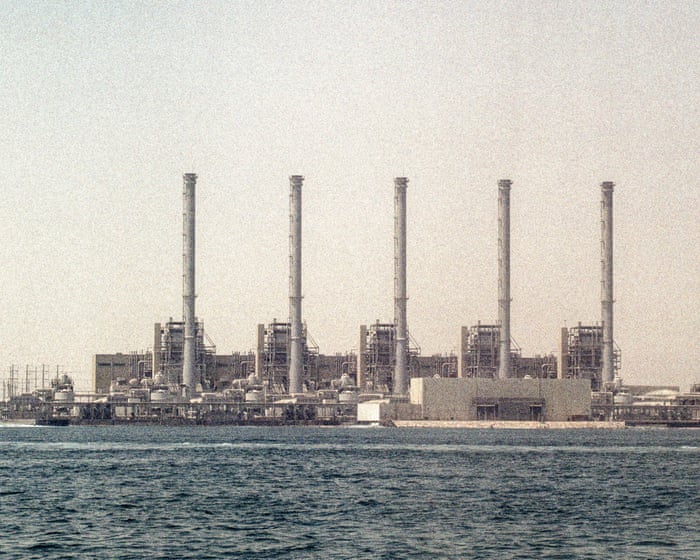
Recent attack on plants led to fears of escalating strikes, but Iran knows drought has left it equally vulnerable Middle East crisis – live updates In 1983, the CIA determined that the most crucial commodity in the Gulf was its desalinated potable water. Although the loss of a single plant could be handled, “successful attacks on several plants in the most dependent countries could generate a national crisis that could lead to panic flights from the country and civil unrest”. And the greatest threat to the region’s water supply?
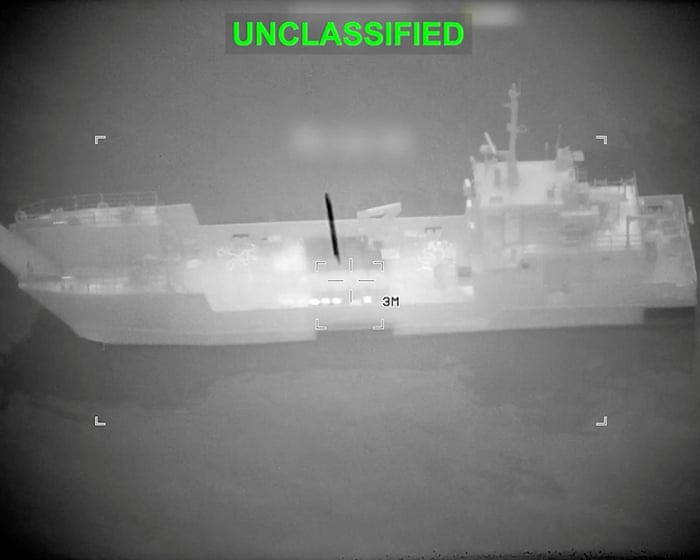
The US military said it attacked and destroyed 16 Iranian mine-laying vessels near the strait of Hormuz amid reports that Iran has begun laying explosive devices in the strategically vital waterway. About one-fifth of the world’s oil passes through the strait, and Iran’s Islamic Revolutionary Guard Corps said this week it will not allow even 'one litre of oil' to leave the region if US-Israeli attacks continue. On Tuesday, Donald Trump said in a post on Truth Social that 'if Iran has put out any mines in the Hormuz Strait, and we have no reports of them doing so, we want them removed, IMMEDIATELY!
It’s called the Dahiya doctrine – and the IDF and US air force are using it to destroy domestic support in Iran Paul Rogers is emeritus professor of peace studies at Bradford University and author of Losing Control: International Security in the 21st Century Given the wall-to-wall coverage of the US and its war on Iran, it looks very much like Trump is the key player. He is not. The United States may have far more military power than Israel, but the key player is Benjamin Netanyahu.
Annual demonstration in support of Palestinian rights especially sensitive in light of US-Israel war on Iran On Sunday, thousands of demonstrators were expected to march through London for al-Quds Day, an annual demonstration in support of Palestinian rights. But the march, which has taken place in the UK for more than 40 years, has been banned by home secretary, Shabana Mahmood. Announcing her decision to ban the march after a request by the Metropolitan police, Mahmood said she was “satisfied doing so is necessary to prevent serious public disorder, due to the scale of the protest and multiple counterprotests, in the context of the ongoing conflict in the Middle East”.
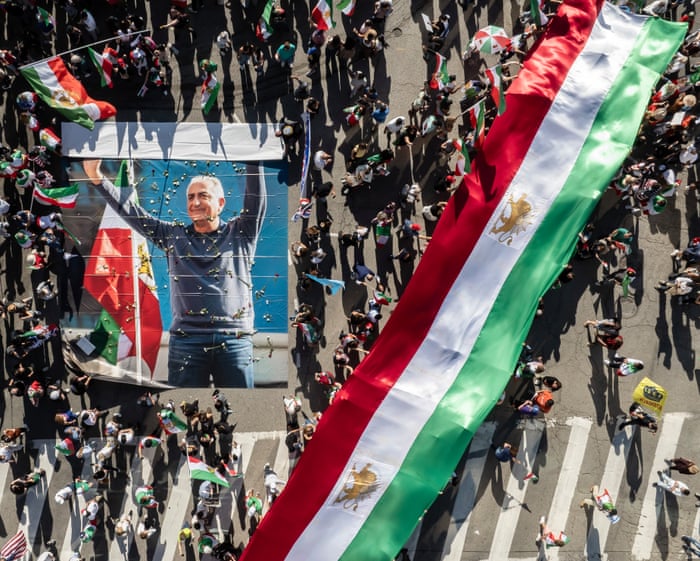
Maga world figures throw weight behind Maryam Rajavi, MEK’s leader, and Reza Pahlavi, the son of last Shah of Iran As a US battle group steamed to the Gulf in November 2002, competing Iraqi exiles, some championed by American insiders, jockeyed for position in the hopes of taking charge once George W Bush toppled Saddam Hussein. Bloomberg dubbed them “Iraq’s unruly opposition”. The most notorious Iraqi exile, failed former banker Ahmad Chalabi, boasted to his neoconservative allies that his return to Baghdad would be welcomed by cheering throngs.
Hundreds of papers relating to his appointment as ambassador to the US to be put into public domain today Good morning and welcome to our coverage of UK politics with the news that the government is to release hundreds of documents relating to Peter Mandelson’s appointment as ambassador to the US later today . The documents will not be released until after Prime Minister’s Questions , meaning MPs will not be able to directly press Keir Starmer on their contents. A pro-Palestinian march in London on Sunday has been banned by the home secretary, Shabana Mahmood , after police warned of a risk of “serious public disorder”.
The Tehran regime has weaponised geography in retaliation for the attacks by the US and Israel Global oil markets have recorded some of the biggest price swings in history this week after the US-Israeli war with Iran throttled the flow of Middle Eastern crude through the strait of Hormuz. The narrow waterway south of Iran is one of the world’s most important trade arteries, through which a fifth of global oil and seaborne gas is shipped from production facilities and refineries in the Gulf to buyers around the world. Continue reading...
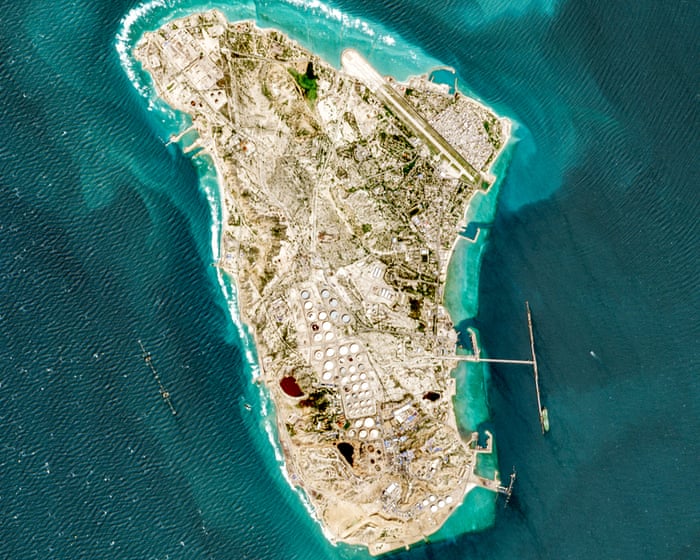
While some argue for destroying the terminal though which 90% of Iran’s oil exports flow, others caution of a global market ‘tailspin’ Kharg Island – through which 90% of Iran’s oil exports flow – is arguably the country’s most sensitive economic target but the export terminal has so far remained untouched throughout the US-Israel bombing campaign. Experts say bombing or capturing the site with US forces would be likely to cause a sustained increase to already surging oil prices, as it would amount to taking the entirety of Iran’s daily crude exports offline. Continue reading...
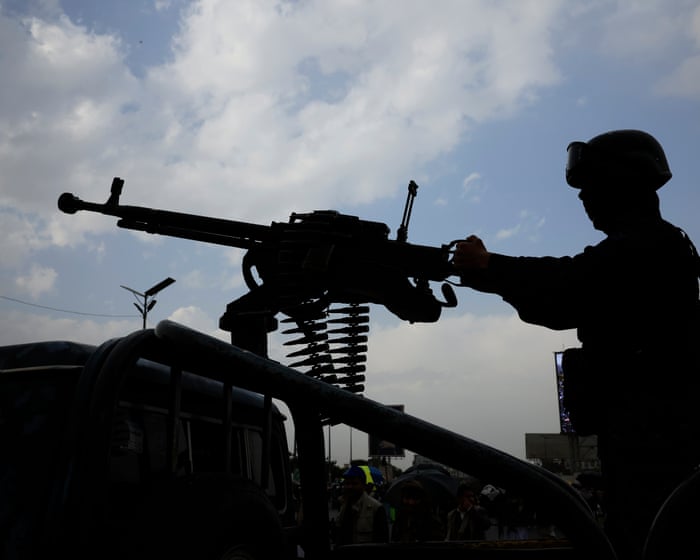
Observers wait to see if Yemen-based Houthis will reopen hostilities as US warships approach Red Sea chokepoint Iranian-backed militias around the Middle East are continuing attacks against Israel , the US and their allies in retaliation for the US-Israeli offensive against Tehran, but have so far held back from all-out confrontation, analysts and regional officials say. The relative restraint suggests that Tehran sees such forces as a strategic reserve to be deployed if the 12-day war continues to intensify – though it may also be a sign that Iranian command and control systems are breaking down. Continue reading...
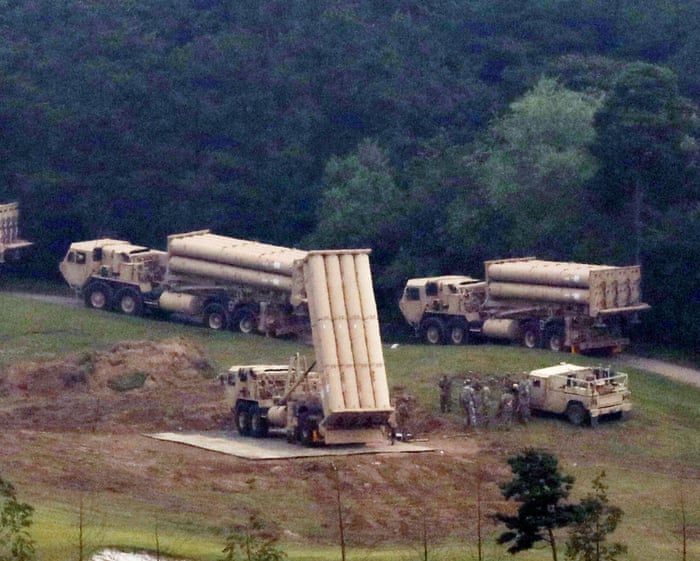
South Korea’s president has sought to reassure the public that the country is able to deter threats from the North It has been almost a decade since the sleepy South Korean village of Seongju was transformed overnight into a key location in the country’s ability to counter an attack from North Korea . Early on a spring morning, camouflaged trucks carrying the US-made terminal high-altitude area defense (THAAD) missile-defence system rolled into Seongju, as the country’s government ignored protests from locals who said the deployment would make them a target for Pyongyang’s ballistic missiles. Continue reading...