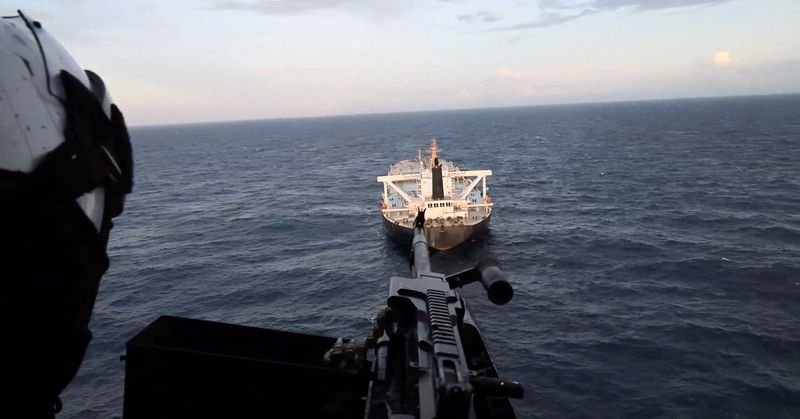
Iranian crude loadings have fallen to about one-seventh of their pre-war level under the US naval blockade, while Chinese receipts of Iranian oil and fuel exports have also dropped sharply, tanker-tracking data reviewed by Iran International shows.
Baghdad [Iraq], August 21 (ANI): Iranian Parliament Speaker Mohammad Bagher Ghalibaf has called for Iranian and Iraqi business leaders to develop a plan to beat 'cruel sanctions,' after US Treasury Secretary Scott Bessent warned Tehran of the 'toughest sanctions in history'.
FM Araghchi says US economic pressure campaign is doomed to fail Iranian Foreign Minister Abbas Araghchi said US President Donald Trump’s threat to launch the “most crushing economic operation ever” against Iran was “doomed to failure”. “We’ve seen this movie before; the same old story, just with different bullies,” Araghchi said, adding that US threats to impose the “most crippling sanctions in history” 14 years ago had failed.
Iran promises to resist interference by foreign 'enemies' as Trump threatens new sanctions Submitted by MEE staff on Fri, 08/21/2026 - 11:11 US Treasury vows 'toughest sanctions in history' in hopes of collapsing Islamic Republic Iran's Parliament Speaker Mohammad Bagher Ghalibaf gives a press conference at an event marking 40 days since the burial of Iran's supreme leader Ali Khamenei in Karbala, Iraq, on 20 August 2026 (Karar Jabbar/AFP) Off Iran’s parliament speaker said efforts by "enemies" to drive Iran and Iraq apart will instead deepen their relationship, as Trump threatened "tremendous" costs for those working with the Islamic Republic. Mohammad Bagher Ghalibaf told an Arbaeen ceremony in the city of Karbala on Thursday that history, geography and shared religious beliefs bound the countries together. “We were two nations that refused to become a footnote in others’ narratives and did not allow our destiny to be written in western capitals,” he said.
Iranian oil prices rise as US blockade tightens supplies to China Iranian crude prices have climbed as fewer cargoes reach Chinese buyers under a tightening US blockade, Reuters reports. Traders said Iranian oil deliveries for September and October had fallen below volumes in July and August. Sellers have already placed much of the crude shipped earlier, leaving fewer barrels available.
How China eased pressure on oil markets by halting purchases and relying on reserves Submitted by Gaspard Rouffin on Thu, 08/20/2026 - 09:23 Beijing’s vast stockpiles and reduced crude imports have helped absorb a supply shock that might otherwise have sent global prices soaring An oil tanker unloads imported crude oil at a terminal in Qingdao Port, eastern China, 16 July 2026 (AFP) Off The closure of the Strait of Hormuz should, in principle, have caused a far greater shock to oil markets than it has. This, in large part, is due to China’s policy of using its strategic stockpiles rather than purchasing crude oil at inflated prices due to the war. Before the war, the strait carried roughly 20 million barrels per day (bpd) – a fifth of global daily oil consumption – with an estimated 10 to 14 percent of global supply remaining inaccessible six months on.
Mohammad Bagher Ghalibaf, lead negotiator in talks with the United States, made the comments after President Trump vowed an “economic D-Day” against Iran.
Beijing has called for diplomacy after Treasury Secretary Scott Bessent urged countries to join Washingtons economic campaign against Tehran China has refused to join a US plan to "squash" Iran's economy, rejecting Washington's push to be part of the "toughest sanctions in history" against the Islamic Republic.
Beijing has called for diplomacy after Treasury Secretary Scott Bessent urged countries to join Washingtons economic campaign against Tehran China has refused to join a US plan to "squash" Iran's economy, rejecting Washington's push to be part of the "toughest sanctions in history" against the Islamic Republic.
Beijing has called for diplomacy after Treasury Secretary Scott Bessent urged countries to join Washington's economic campaign against Tehran China has refused to join a US plan to "squash" Iran's economy, rejecting Washington's push to be part of the "toughest sanctions in history" against the Isla
JD Vance says US economic pressure 'most effective tool' against war on Iran US Vice President JD Vance said that the country has entered a "new phase" in its war on Iran, leading with economic pressure as Washington's "most effective tool". "We're kind of now in a new phase where the most effective tool that we have is the economic pressure that we can apply to them," Vance said during an interview with The Clay Travis & Buck Sexton Show. “We're going to keep that going," he added.
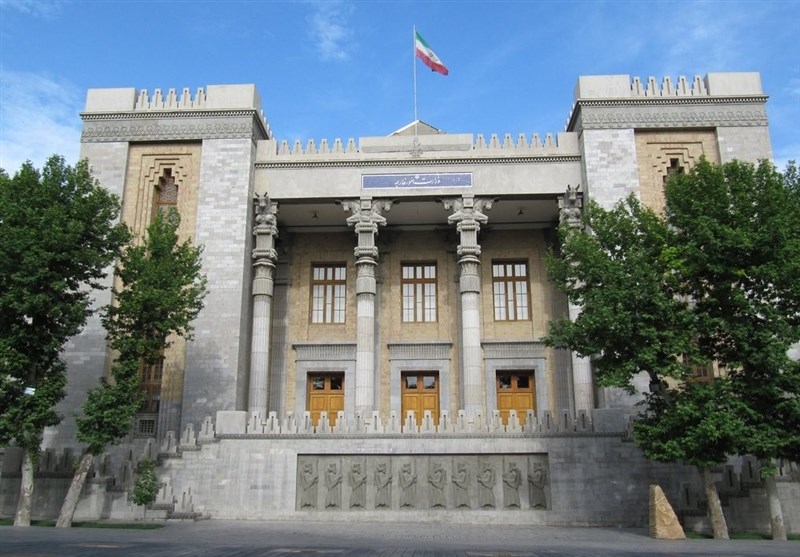
TEHRAN (Tasnim) – Iran’s Foreign Ministry condemned the latest US sanctions against the country, describing Washington’s decades-long policy of economic pressure as a form of “economic terrorism” and a “crime against humanity” that will not weaken Iran’s resolve to defend its independence.
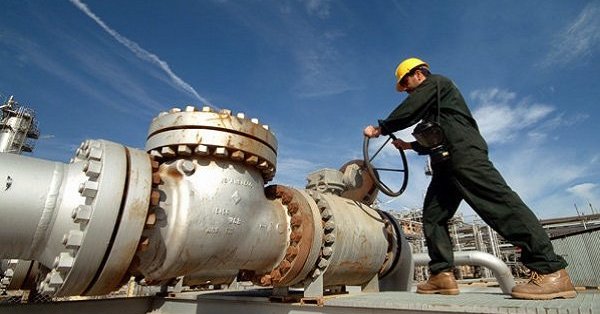
The expiry of a 25-year gas contract has exposed a shift in the Iran-Turkey energy relationship, with Ankara now enjoying more supply options while Tehran risks losing one of its most dependable export markets.
US vows to 'collapse' Iran with new sanctions as energy prices spike The US will impose "the toughest sanctions in history” on Iran, Secretary of the Treasury Scott Bessent said on Thursday, vowing to ramp up economic pressure on the Islamic Republic even as the economic toll of the war builds. "It is a one-two punch. We have the blockade [on Iran], and we are going to have the toughest sanctions in history," Bessent told CNBC.
Washington, DC [US], August 21 (ANI): US Vice President JD Vance on Thursday (local time) said economic pressure remains the 'most effective tool' available to Washington against Iran, while describing the approach as a 'delicate dance', CNN reported.
Washington, DC [US], August 21 (ANI): The Trump administration on Thursday (local time) imposed new sanctions on Hezbollah and redesignated the group as an Iranian proxy, CNN reported. The US Treasury Department announced sanctions on 10 individuals alleged to be 'part of a network responsible for transferring cash' to Hezbollah.